

CARPAL TUNNEL SYNDROME: Frequent & Sometimes Debilitating
WHAT IS IT?
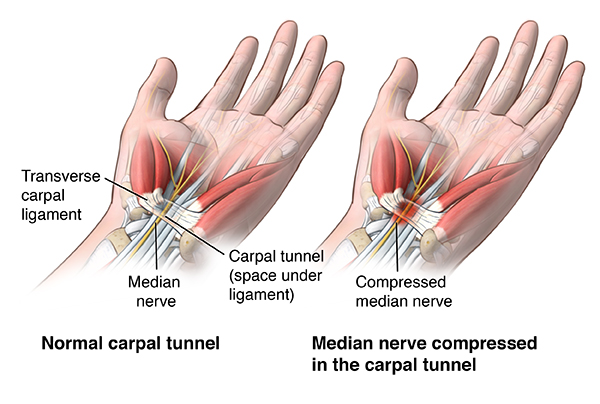
In the human body, there are several areas in which a pinched nerve can develop. One of the most common is the median nerve at the wrist and when this occurs this is called Carpal Tunnel Syndrome. A variety of symptoms can occur including:
Numbness/tingling in the hand, typically worse at night and first thing upon waking in the morning. This of course affects quality of sleep as patients will regularly wake and describe they have to shake their arm for relief or get out of bed.
During the daytime symptoms are usually more intermittent, however occur with texting, holding a phone to ear to talk or while driving.
In more severe cases, symptoms will tend to persist for more hours of the day and people can develop pain and/or weakness in their hand. This weakness and dropping items more regularly as muscles around the thumb can atrophy.
What are the risk factors?
There are some risk factors that make one more likely to develop Carpal Tunnel Syndrome including:
Pregnancy, obesity and metabolic conditions. These result in increased fluid build-up in the wrist and hand causing more consistent pressure on the medial nerve.
Mechanical trauma from repetitive hand movements or direct impact from activities such as use of vibrating tools that press on the nerve.
Many people who develop CTS may have a pre-existing carpal tunnel size, thereby making the median nerve more likely to get irritated over time with daily use of our hands.
Diagnosis:
Carpal Tunnel Syndrome does not involve imaging to make a diagnosis. A thorough history and physical examination including orthopaedic tests is usually sufficient. In some cases, referral to a specialist for electrodiagnostic studies is necessary for confirmation and assessing severity.
Treatment:
Education, ergonomic recommendations, manual therapy and exercises are typically helpful in relieving symptoms.
Wearing a wrist splint at night keeps the wrist in a position that allows the most available room for the median nerve. This leads to less symptoms and more quality sleep.
Less commonly, If conservative treatments fail, surgical options like carpal tunnel release surgery are considered. This procedure involves cutting the transverse carpal ligament to relieve pressure on the median nerve. Surgery is generally successful, with a low recurrence rate.
If you are suffering from numbness, tingling, pain or weakness in your hand, have it evaluated thoroughly by a chiropractor. This can lead to proper diagnosis and appropriate management.
Written by: Chris Carter, BSc, DC, MSc(PainMgt)